Grief is one of the most complex emotions a child can experience—and one of the hardest for adults to explain. In the United States, where conversations around mental health and emotional intelligence are increasingly prioritized, children’s books about grief have emerged as essential tools for families, educators, and therapists. These books do more than tell stories—they create pathways for healing.
Unlike direct conversations, which can feel overwhelming, children’s fiction books offer a gentle, structured way for children to explore difficult emotions. Through relatable narratives and carefully crafted children’s book characters, young readers learn that grief is not something to fear—it’s something to understand.
Storytelling provides emotional distance while still addressing real pain. It allows children to process loss at their own pace, making children’s grief books a cornerstone of early emotional development.
Why Children’s Grief Books Matter in Early Emotional Development
Children process loss very differently from adults. They may not have the vocabulary to express their feelings, leading to confusion, behavioral changes, or withdrawal. In the U.S., where child psychology increasingly emphasizes early intervention, providing the right emotional tools is critical.
Emotional Challenges Children Face After Loss
Children often experience:
- Confusion about what death means
- Fear of abandonment or further loss
- Night terrors or anxiety
- Difficulty expressing sadness or anger
Without guidance, these emotions can manifest in ways that affect long-term emotional health.
The Role of Children’s Grief Books in Coping
Well-written children’s books about grief:
- Normalize feelings of sadness and confusion
- Provide language for complex emotions
- Offer examples of healthy coping mechanisms
- Reinforce that healing is possible
These books act as both mirrors (reflecting the child’s experience) and windows (showing a path forward).
Creating Safe Emotional Spaces Through Stories
Books create a controlled environment where children can:
- Revisit emotions safely
- Ask questions without pressure
- Connect with characters facing similar challenges
This is why children’s books on friendship and emotional connection are often integrated into grief narratives—they reinforce the idea that no one has to go through loss alone.
Samantha’s Shadow – A Powerful Children’s Book About Grief
Among modern fiction children’s books, Samantha’s Shadow stands out as a deeply authentic and emotionally intelligent story. Rooted in real-life inspiration, it aligns with the growing demand in the U.S. for books that combine storytelling with emotional education.
Overview of Samantha’s Shadow
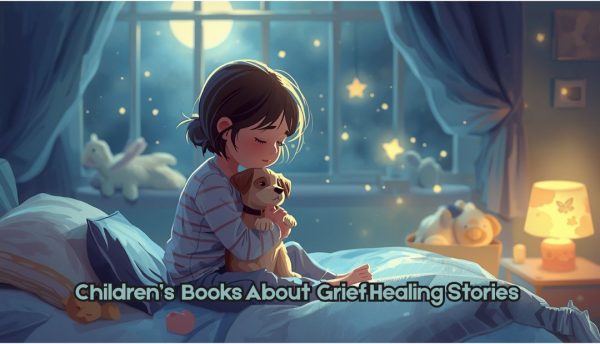
Samantha’s Shadow follows Samantha Jo, a young girl navigating the devastating loss of her father. Struggling with confusion and night terrors, she feels isolated in her grief—until a puppy named Shadow enters her life.
Through this bond, the story unfolds as a journey of healing, showing how companionship and unconditional love can help children rebuild emotional security.
Core Themes: Loss, Healing, and Companionship
This book effectively explores:
- The reality of grief without overwhelming the reader
- The importance of emotional support systems
- The healing role of animals and companionship
Unlike many children’s grief books, it doesn’t rush the healing process. Instead, it respects the child’s emotional timeline—an approach aligned with modern child therapy practices in the United States.
What Sets It Apart in Fiction Children’s Books
Samantha’s Shadow distinguishes itself by:
- Being based on a true story
- Using simple yet emotionally rich language
- Balancing sadness with hope
- Offering practical emotional reassurance
It is not just a story—it’s a resource for families, educators, and counselors seeking meaningful tools for difficult conversations.
Children’s Book Characters That Help Kids Relate to Loss
Strong children’s book characters are the backbone of effective storytelling—especially in emotionally sensitive topics like grief.
Samantha Jo as a Relatable Character
Samantha Jo reflects the real emotional experience of many children:
- She feels confusion and fear
- She struggles to articulate her emotions
- She gradually learns to cope
This authenticity builds trust with young readers.
The Role of Shadow (the Puppy)
Shadow is more than a companion—he symbolizes:
- Comfort without judgment
- Emotional stability
- Unconditional love
In many children’s books on friendship, animal characters serve as emotional bridges, helping children feel safe and understood.
Why Character Development Matters
Well-developed characters:
- Help children externalize their emotions
- Provide behavioral models for coping
- Make abstract feelings more tangible
This is why character-driven storytelling is central to effective children’s books about grief.
How Fiction Children’s Books Support Emotional Healing
The value of fiction children’s books extends far beyond entertainment. In the U.S., they are increasingly used in both educational and therapeutic settings.
Real-Life Benefits of Fiction-Based Storytelling
- Encourages emotional expression
- Builds empathy and social awareness
- Helps children understand different perspectives
Encouraging Empathy and Understanding
When children see characters navigating grief:
- They learn that their feelings are valid
- They develop compassion for others
- They feel less isolated
This is particularly important in classroom settings, where children’s books on friendship can foster peer support and understanding.
Use in Therapy, Classrooms, and Homes
Professionals and caregivers use children’s grief books to:
- Start conversations about loss
- Guide emotional discussions
- Reinforce coping strategies
Books like Samantha’s Shadow are especially effective because they combine narrative engagement with emotional realism.
Choosing the Best Children’s Books for Difficult Conversations
Not all children’s books about grief are created equal. Selecting the right book is essential for meaningful impact.
What to Look for in Children’s Books
- Authentic and age-appropriate storytelling
- Emotionally honest but not overwhelming content
- Clear themes of hope and resilience
Age-Appropriate Storytelling
For younger children:
- Simple language
- Visual storytelling elements
For older children:
- Deeper emotional exploration
- More complex character development
Gentle Language and Hopeful Endings
Books should:
- Validate emotions without intensifying fear
- Offer reassurance and emotional closure
- Encourage open dialogue
This balance is critical in ensuring that children’s grief books support healing rather than confusion.
Final Thoughts: The Lasting Impact of Children’s Books About Grief
In today’s emotionally aware and fast-evolving U.S. landscape, children’s books about grief are no longer optional—they are essential. They provide children with the tools to understand loss, build resilience, and reconnect with hope.
Books like Samantha’s Shadow, available through SandyBooks, position storytelling as a powerful force for emotional growth. By combining compelling narratives with meaningful life lessons, they elevate the role of ction children’s books from simple entertainment to transformative experiences.
For parents, educators, and counselors, the message is clear:
Investing in the right children’s books, strong children’s book characters, and emotionally intelligent storytelling can make a lasting difference in a child’s life. Because sometimes, the first step toward healing… begins with a story.